Why Your Meta Ads Are Generating Low-Quality Leads (and How to Fix It)
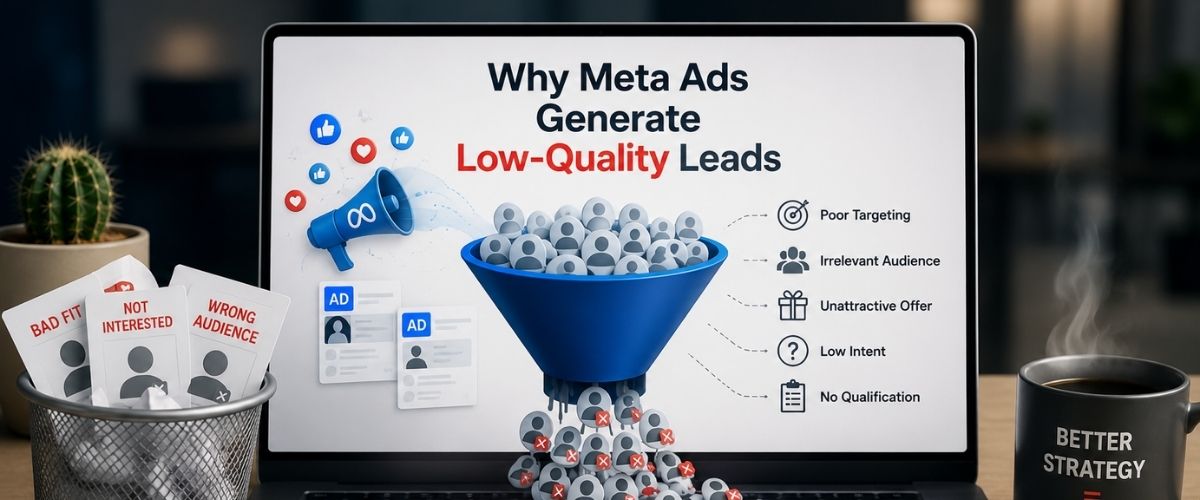
You are spending hard-earned money on Meta ads, and on paper, the campaign looks like a success because leads are rolling into your system. However, the reality sets in the moment you or your sales team try to follow up. Half of the contacts do not pick up the phone, the other half have absolutely no idea what they signed up for, and you are left weeding through a digital stack of completely uninterested contacts just to find one or two prospects actually worth talking to. This leaves business owners frustrated, wasting money, and thinking social media ads do not work.
The truth is that you are not alone, and this is one of the most common bottlenecks we solve when service businesses first partner with Karma Media. When your ads are running hot but the leads are cold, it is almost never a Meta platform defect; it is a strategic setup problem. Meta is highly effective at getting people to take action, but your funnel must make sure those actions lead to real business opportunities. By finding where your ads are wasting money, you can turn your campaign into a reliable source of new customers.
Signs Your Ads Need Fixing
1. Targeting the Wrong Audience
Meta has over 3 billion users. That is a lot of people who will never buy from you, and if your targeting is too broad, you are paying to reach them anyway. Conversely, targeting too narrowly can hurt results because Meta needs enough data to find potential customers.
How to Improve Targeting:
- Start with your best data: Upload a list of your top 200–300 lifetime clients and create a lookalike audience. Meta will look at your highest-value customer segment and find new users who behave exactly like them.
- Use interest stacking carefully: Do not just pick 15 random interests. Instead, pick two or three that are highly specific to your ideal buyer.
- Exclude audiences intentionally: If you market a premium service, explicitly exclude audiences that skew towards bargain hunting or DIY solutions.
The Bottom Line: Bad targeting equals good ad spend but bad leads. Fix the audience foundation first.
2. Your Ad and Landing Page Do Not Match
This is a massive point of failure for many campaigns. Someone sees your ad promising a specific result such as gaining 10 new clients in 30 days. They click through expecting a direct action plan, but they land on a generic corporate homepage that talks about your company history, internal values, and a vague contact form buried at the bottom.
The lead drops off immediately. Or worse, they fill it out purely out of momentum but remain confused about what they actually signed up for. Your ad and landing page must share a seamless message match. They need the same core message, the same offer, and the same tone. If your ad makes a specific promise, your page needs to validate and back up that promise within the first 5 seconds of reading. When a message match is off, your cost per lead goes up and your lead quality plummets at the same time.
3. Native Lead Forms vs. Custom Landing Pages
Meta's native instant lead forms are incredibly easy to set up, but that lack of friction is exactly why they can attract low-intent users. Because Meta autofills a user's contact details instantly, someone can become a lead with just a single accidental tap while scrolling their feed. They did not read your offer details, evaluate your business, or deeply consider whether they wanted to be contacted.
While native forms are highly efficient for lowering friction, they must be optimised correctly. If you want to maximise high-intent filtering, a dedicated landing page adds a few deliberate steps that naturally screen out people who are not serious.
Steps a Landing Page Forces Prospects to Take:
- Click your ad and wait for a new page to load.
- Read through your structured offer headlines.
- Actively decide that they want your solution.
- Manually fill in or verify their custom details.
That extra intent acts as a natural quality filter. The people who complete the process genuinely want what you are selling. For context, our optimised landing page lead magnets convert cold traffic at 23%, which is more than four times the standard industry average of 2–5%. That massive jump comes entirely from building real landing experiences instead of taking shortcuts.
4. Your Offer Is Not Clear
Getting a free consultation or contacting us for a quote is not a compelling marketing offer; it is an industry cliché that every competitor uses. A high-converting offer needs absolute specificity. For example: Find out exactly how many leads your competitor is getting from Facebook ads in a free, 20-minute strategy call.
The more specific and tangible your offer, the better your incoming lead quality will be. Specific offers naturally attract people who want that exact outcome, whereas vague offers attract a broad crowd with no genuine buying intent.
Why Vague Offers Fail:
- Zero Perceived Value: Prospects see right through phrases like free consultation they know it is just a disguised sales pitch.
- Attracts the Wrong Audience: Broad, non-specific offers attract bargain hunters and people looking for general, free advice rather than serious business owners.
- High Cognitive Load: A vague offer forces the user to try and figure out what they actually get out of the interaction, causing them to keep scrolling.
5. Your Follow-Up Infrastructure Is Too Slow
Sometimes the issue is not the ad or the landing page, it is the timeline of what happens immediately after the submission. If a prospect fills out your form at 9:00 PM on a Tuesday and your sales team does not place a call until 2:00 PM on Thursday, that lead is no longer just cold; it is dead. They have forgotten your brand name, and they may have already booked a call with a competitor who got back to them first.
Data consistently shows that the chances of successfully connecting with and converting a lead drop by over 80% if you do not make contact within the first hour. Fast follow-up is an indispensable part of the lead quality equation. A hot, high-intent lead handled slowly quickly degrades into an unresponsive contact.
How to Fix Your Response System:
- Instant Automation: Set up automated CRM triggers so leads receive an instant, personalised text message or email the exact second they submit their details.
- Rapid Phone Outreach: Ensure your technical infrastructure flags new opportunities immediately so your sales team can place a direct phone call to the lead within 60 minutes of submission.
6. You Are Sending Ad Traffic to Your Homepage
Your website's homepage is built to serve everyone. It provides overview information about your full suite of services, team bios, awards, and overall brand story. While that is perfect for organic visitors who already know your brand, it is completely overwhelming for cold traffic coming directly from a targeted Meta ad. When a user lands on a page with multiple navigation menus and no singular focus, they get distracted, get overwhelmed, and bounce.
Why Your Homepage Kills Ad Conversions:
- Too Many Distractions: Multiple navigation tabs, social media links, and different service pages give users too many places to click away from your offer.
- Lack of Direct Relevance: If your ad promises a specific deal or solution, a generic homepage forces the user to go hunting for it themselves.
- No Clear Next Step: Without a single, obvious call-to-action button, cold traffic will simply hit the back button.
Every distinct Meta ad campaign needs its own dedicated, standalone landing page. If your current ad budget is driving traffic to your standard website homepage, stopping that campaign and building a dedicated landing page is the single biggest money leak you can plug in your marketing right now.
7. Your Ads Look Too Corporate
Social media users scroll through their feeds quickly and have developed banner blindness. Their brains automatically filter out anything that looks like a glossy, traditional corporate ad before they even process the text.
The top-performing ad creatives across Meta right now are designed to look like organic user content.
High-Converting Content Styles to Use:
- Real, behind-the-scenes team photos.
- Authentic, unedited customer video stories and testimonials.
- Casual, native video explainers filmed directly on a smartphone.
- Direct, conversational ad copy that reads like a message from a colleague rather than a corporate tagline.
When your ad blends naturally into a social feed, users stop scrolling and actually consume the content. This means only the people who are genuinely interested in your narrative will click through, leading to vastly superior lead quality at the end of the funnel.
Conclusion
Generating low-quality leads from Meta ads is a systems problem, not a luck problem. To transform your conversion rates, you must systematically align every single stage of your digital advertising framework, ensuring your targeting maps perfectly to your landing page, your offer provides undeniable value, your automation engages instantly, and your sales team responds with absolute speed. Optimising just one of these components will give you a minor lift, but when all of these elements work together seamlessly, your pipeline fills with high-intent prospects who are actively waiting for your call.
At Karma Media, we focus on building tightly integrated, cohesive systems to maximise return on ad spend. If your ads are running but your pipeline is not converting, there is a leak in your funnel. Feel free to contact us today to find that leak together, or click below to claim your free strategy session.